Q1: What defines a monofilament-based filter screen in industrial manufacturing?
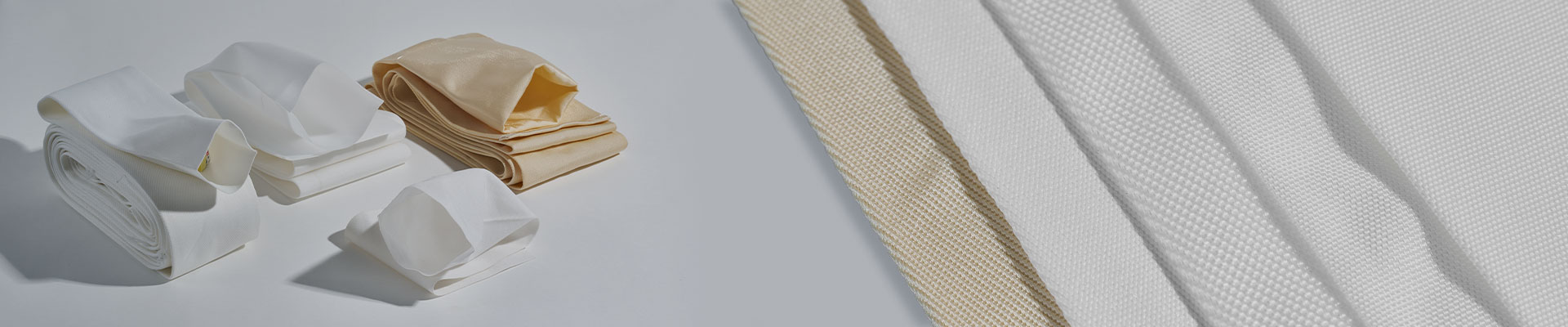
In the filtration textile manufacturing sector, a Monofilament Filter Screen is recognized for its uniform fiber construction. Unlike multi-strand yarns, monofilament yarns consist of single, continuous filaments. This structure allows manufacturers to achieve predictable pore geometry during weaving.
From a production standpoint, controlling filament diameter is essential. Small variations can affect mesh opening consistency, which directly influences separation accuracy. For this reason, extrusion and drawing processes are closely monitored before weaving begins. A well-produced monofilament structure also supports stable mechanical behavior during repeated filtration cycles.
Because surface smoothness is inherent to monofilament yarns, cleaning efficiency is often improved, making this screen type suitable for reusable filtration systems.
Q2: Why is nylon frequently selected for monofilament filter screens?
A Nylon Monofilament Filter Screen is commonly used when flexibility and abrasion resistance are required. Nylon fibers provide a balance between mechanical strength and elasticity, allowing the screen to maintain shape under tension without permanent deformation.
During manufacturing, nylon filaments undergo thermal stabilization to ensure dimensional consistency during weaving. This step helps reduce mesh distortion, especially in applications involving fluctuating temperatures or moisture exposure.
From a processing perspective, nylon materials also allow precise heat-setting after weaving. This enhances mesh stability while maintaining the openness required for controlled filtration. As a result, nylon-based screens are often selected for processes that demand repeated washing or backflushing.
Q3: How does mesh precision impact filtration performance?
In industrial filtration systems, accuracy depends heavily on pore uniformity. A Precision Filtration Mesh is designed to maintain consistent aperture sizes across the entire surface area. This consistency allows predictable particle retention while supporting steady flow rates.
Manufacturers achieve precision by fine-tuning loom tension, warp alignment, and weft insertion speed. Even minor inconsistencies can cause uneven filtration results. For this reason, precision-focused production lines often include in-line optical inspection systems.
When produced using monofilament yarns, precision meshes benefit from reduced fiber overlap. This contributes to cleaner pore edges and minimizes clogging risk during operation.
Q4: How are different screen specifications matched to application needs?
Filtration screen specifications vary depending on industry requirements such as food processing, chemical handling, or water treatment. Each application requires a tailored balance between strength and separation accuracy.
The table below outlines general manufacturing considerations:
| Application Environment |
Key Requirement |
Manufacturing Focus |
| Liquid clarification |
Consistent pore size |
Mesh calibration |
| Abrasive particles |
Wear resistance |
Filament selection |
| Frequent cleaning |
Shape retention |
Heat-setting control |
A Monofilament Filter Screen is often chosen when surface uniformity is critical. In contrast, a Nylon Monofilament Filter Screen may be preferred in systems requiring repeated mechanical stress. When tight tolerance control is required, a Precision Filtration Mesh supports stable output across extended operating periods.
Q5: What quality control measures support reliable filtration screens?
Quality control begins at the raw material stage. Filament diameter, tensile behavior, and surface consistency are tested before weaving. For nylon-based products, moisture absorption characteristics are also evaluated.
During weaving, a Precision Filtration Mesh undergoes continuous inspection to confirm mesh opening accuracy. Automated measurement tools help detect deviations early, reducing material waste. After finishing, screens are tested for dimensional stability and mechanical response.
For a Nylon Monofilament Filter Screen, post-production checks often include heat exposure tests to confirm shape retention. Meanwhile, each Monofilament Filter Screen is visually inspected to ensure uniform structure before cutting or fabrication.
Filtration screen manufacturing relies on controlled material processing, precise weaving techniques, and structured quality management. Whether producing a Monofilament Filter Screen for reusable systems, developing a Nylon Monofilament Filter Screen for flexible applications, or engineering a Precision Filtration Mesh for controlled separation, manufacturers focus on consistency and functional reliability. Through careful alignment of materials and processes, filtration textiles continue to support diverse industrial operations with dependable performance.


 عربى
عربى