عربى
عربى
Material Engineering Brings New Possibilities
Across industrial production, filtration components have evolved from simple barriers into carefully engineered products designed for specific operating conditions. Among these materials, the Polypropylene (PP) Mesh Filter Screen has gained attention for its balance of lightweight construction, stable structure, and processing flexibility.
Manufacturers are supplying polypropylene mesh for liquid filtration, air handling equipment, food processing, chemical production, agriculture, water treatment, and laboratory applications. Rather than relying on a single mesh design, producers now develop products with different opening sizes, weave patterns, and thicknesses to meet varying filtration requirements.
This growing diversity has encouraged continuous improvements in material formulation, weaving technology, and production efficiency, making the Polypropylene (PP) Mesh Filter Screen an important product category within technical textiles.
Polymer Selection Influences Product Characteristics
Every Polypropylene (PP) Mesh Filter Screen begins with carefully selected polypropylene resin. Material consistency plays an important role because it influences filament strength, dimensional stability, and processing performance throughout manufacturing.
The resin is melted and extruded into continuous filaments under controlled temperature conditions. During stretching and cooling, the fibers develop stable mechanical properties suitable for weaving or knitting into mesh structures.
Manufacturers also pay close attention to filament diameter. Small variations in fiber size may influence mesh opening consistency, making precision extrusion an essential part of production.
Uniform raw materials provide a reliable foundation for producing filtration media capable of serving a wide variety of industrial applications.
Mesh Structures Adapt to Different Filtration Tasks
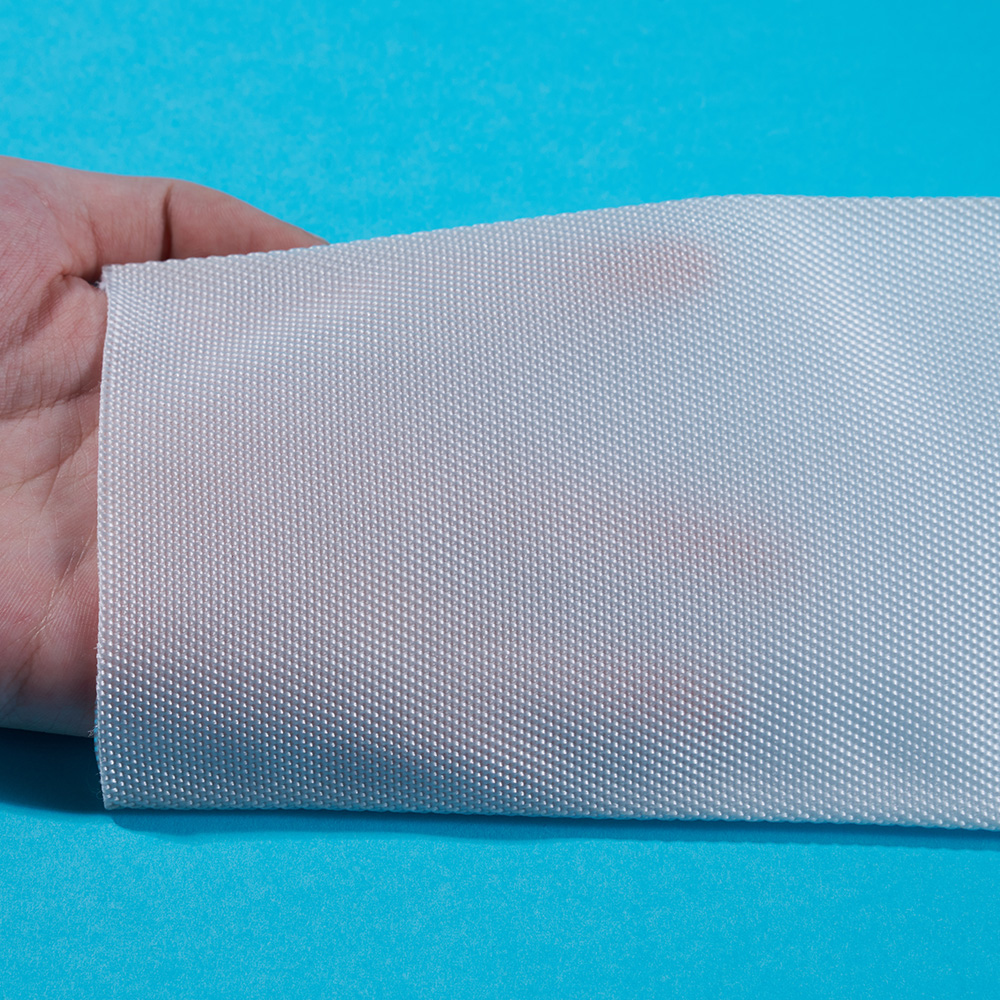
The structure of a Polypropylene (PP) Mesh Filter Screen is determined not only by the material itself but also by how individual filaments are arranged.
Plain weave remains one of the commonly used structures because it creates balanced mesh openings suitable for many filtration processes. Twill weaving offers increased flexibility for selected applications, while warp knitting provides another option where lightweight mesh construction is preferred.
Different mesh densities allow manufacturers to supply products for varying filtration conditions.
| Mesh Feature | Typical Manufacturing Focus |
| Fine Mesh | Small particle separation |
| Medium Mesh | General industrial filtration |
| Coarse Mesh | Large particle screening |
| Reinforced Mesh | Additional structural support |
| Multi-Layer Mesh | Complex filtration assemblies |
This variety enables manufacturers to tailor the Polypropylene (PP) Mesh Filter Screen for equipment operating under different flow rates and filtration objectives.
Conversion Processes Expand Product Applications
Many industrial users require the Polypropylene (PP) Mesh Filter Screen in forms other than standard rolls. As a result, converting operations have become an important stage within manufacturing.
After weaving, mesh materials may be processed into die-cut discs, filter sleeves, filter bags, cylindrical cartridges, molded inserts, or laminated composite structures.
Common secondary processing operations include:
- Precision die cutting
- Ultrasonic welding
- Heat sealing
- Edge reinforcement
- Roll slitting
- Custom shape fabrication
These conversion capabilities allow manufacturers to supply filtration components that integrate directly into customer equipment without requiring extensive additional processing.
Broad Industrial Demand Encourages Product Diversity
The versatility of the Polypropylene (PP) Mesh Filter Screen has encouraged its adoption across numerous industries. Processing plants use mesh materials for liquid separation systems, while water treatment equipment incorporates precision mesh into filtration assemblies. Agricultural equipment manufacturers integrate polypropylene mesh into irrigation filters, and laboratory devices often require accurately manufactured screening materials for sample preparation.
Equipment designers also continue requesting customized mesh sizes, reinforced constructions, and specialized component shapes that match unique system layouts. This demand has encouraged manufacturers to expand production flexibility while maintaining consistent quality throughout the manufacturing process.